
This artifact is a paper written by Kumi (2017) and commissioned by the Center for Global Development in a bid to obtain a better understanding of Ghana’s context, and the role of international actors with respect to energy: specifically, electrification. Despite the doubling of installed...Read more
PA regulators have approved PECO’s plan to implement time-of-use rates for its customers, including both residential and commercial consumers. The hope is that some will shift electricity use to off-peak hours, during which rates of use will be discounted. The system has three price tiers...Read more
This brief article concisely summarizes available options for people and households in need of bill assistance. Prior to providing information on bill assistance, however, this article goes into an all-familiar step-by-step on how to change our household behaviors to reduce energy expenditure....Read more
Massachusetts’ new $668 million three-year energy efficiency plan is awaiting approval from the state Department of Public Utilities. This plan include provisions to increase outreach and expand eligibility in underserved communities and pay utilities for providing services in these...Read more
Energy efficiency is becoming an increasing topic of discussion and consideration in city planning and in environmental action. Energy efficiency planning also creates avenues for employment and improvements in health. Modification in buildings' stock is a focus given they account for 1/3 of US...Read more
The City of Philadelphia’s Department of Commerce—in partnership with Philadelphia’s economic and workforce development partners—today announced a renewed strategic commitment to address workforce challenges brought about by the COVID-19 pandemic and that have been exacerbated by long-...Read more
As already documented prior to the pandemic, Black, Latinx, and minority-owned businesses tend to fare worse than white-owned businesses. With the advent of the pandemic, Black and Latinx-owned businesses closed down at twice or nearly twice the rate of white-owned businesses. A combination of...Read more

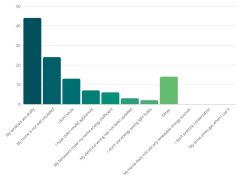
This article is particularly relevant to investigations on energy vulnerability, but also particularly relevant to predictions of compounded vulnerabilities made by the research group before the first round of interviews. For example, one of the people interviewed said she was forced to shut her...Read more